Inside the NHL’s first-of-its-kind partnership with Verizon to power the future of professional sports
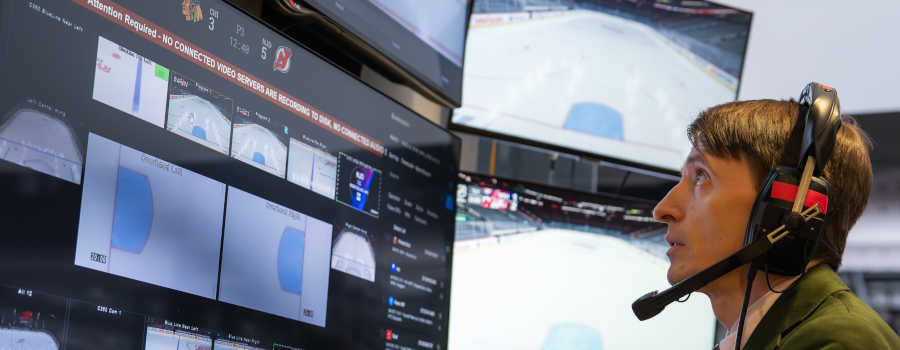
The puck drops, and within moments, a coach on the bench is reviewing the previous shift on a tablet. A camera inside the net captures a decisive moment and transmits it instantly to the NHL Situation Room in Toronto. Every interaction depends on one thing: flawless, real-time connectivity.
The National Hockey League is North America's premier professional ice hockey organization with 32 teams across two countries, entertaining more than 670 million fans each year through in-arena attendance and global broadcast partners. After more than a century of shaping the game, delivering a modern, technology-driven game-day experience required more than passion for hockey. It required connectivity precise enough for real-time decision-making and resilient enough to withstand 41 home games a season for each of its 32 teams.
"The NHL mission is to super serve our fans and to provide the best action on the ice that we possibly can," said Grant Nodine, Senior Vice President of Technology, who has spent 25 years driving the League's technology evolution. "I have made it my mission to get technology into the hands of fans, officials, coaches and players to enhance their experiences and help them do their jobs better."
With that mission in mind, the League made a decisive move. Partnering with Verizon, the NHL deployed a private wireless network across all 25 U.S.-based arenas, with seven Canadian venues to follow. The first-of-its-kind initiative was designed to elevate game-day operations, enable advanced real-time applications, and establish a scalable digital platform to support the next generation of hockey innovation.
When every building runs its own flavor of wireless connectivity
Tim Brown, Senior Manager of Technical Operations for the NHL, knew what could go wrong when game-day technology depended on shared arena Wi-Fi. "You could test their captures, video software and hardware. Everything's going to work 100% fine," he said. "And then the doors open and the fans come in. It all goes out the door. You start seeing dropped packets of video."
As demand surged, the applications that power how the game is played, coached and officiated were left competing for bandwidth with thousands of fans' smartphones. Ownership, players and fans had come to expect consistent, reliable network performance game after game, but the network wasn't always able to deliver.
Every arena presented its own set of complications, as well. "We have 32 venues spread across two different countries, and all of their venues have their own flavor of wireless connectivity," said Sean Williams, Vice President of Innovation, Technology Partnerships. When one building had reliable video, and another didn't, the playing field wasn't level. "If one team has video and analytics and the other team does not, that fundamentally becomes a competitive advantage. And that's not something we can have," he added.
These network challenges weren't limited to game-day operations—how fans consumed content was shifting, too. "Generationally, we have a lot of different content consumption patterns," Nodine said. Gen Z viewers want bite-sized mobile content, for example, while traditional fans want the classic broadcast experience.

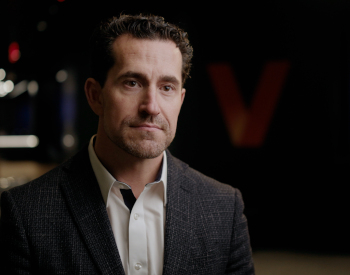
We trust Verizon. We know they can deliver. So we rely on Verizon to guide us when new technologies are coming to life.
Sean Williams, Vice President of Innovation, Technology Partnerships, NHL
A Verizon private wireless network purpose-built for game day
Verizon proposed a league-wide private wireless network, with U.S. venues connected in January 2026 and Canadian venues to follow later in the year. The dedicated 5G/LTE network would be entirely segmented from fan Wi-Fi, providing zero interference, low latency and enhanced security.
"With Verizon, we know exactly who's on our network," Williams said. "We've provisioned them to be on our network; we allow them specific applications and control the lanes in which they're running."
On the bench, players can review footage through Catapult and Hudl applications, analyzing face-offs and positioning between shifts. Behind them, coaches collaborate in real time with video coaches on strategy adjustments and challenge decisions.
Net cameras can rapidly transmit footage to the League's Situation Room in Toronto, and the network provides reliable connectivity for broadcast and social media teams to move high-quality video to the cloud.
"The thing that I like the most about the private wireless network is that I can be certain that a device that I give to an away coach has no access to the home coach's network and vice versa," Nodine said. That design guarantees competitive balance, regardless of which building they're in.

I've been very happy with our partnership with Verizon, mostly because I feel we’ve had a shared vision of co-innovation.
Grant Nodine, Senior Vice President of Technology, NHL
The NHL and Verizon build a platform for continued digital transformation
The NHL is leading professional sports leagues in implementing private wireless across all its venues. "For the NHL to digitally transform, we need a network that provides more bandwidth, more security and better reliability," Williams explained. "A private wireless network fits those needs perfectly."
Puck and player tracking systems already generate real-time data traveling over the 5G network. The same foundation will support future fan experiences, game-integrity tools and player health applications. "Being able to translate what we learn in one building to all of them and have that network be the one constant, ubiquitous asset that we have is liberating," Nodine said.
For the people running operations, the difference is tangible. "Walking into a building knowing that we have that sort of backing and security just makes the day go smoother," Brown said. "It gives us that confidence to move forward and deal with other things, innovate and bring more to the table."
Camera feeds can now be moved to a shared cloud location, allowing the League to explore customized broadcasts with different data, angles and viewing experiences for different audiences.
Advancing a shared vision of co-innovation
"I've been very happy with our partnership with Verizon, mostly because I feel we've had a shared vision of co-innovation," Nodine said. "These are the things that are important to Verizon, and these are the things that are important to the NHL."
That spirit of collaboration extends beyond network deployment to the NHL Innovation Lab powered by Verizon, where the League will test emerging technologies in an ice environment before deploying them in arenas—from advanced camera capabilities to innovative ways to capture and deliver the game.
"When we look at new technologies, Verizon is one of the first tech partners that we turn to," Williams said. "We trust Verizon. We know they can deliver. So we rely on Verizon to guide us when new technologies are coming to life."